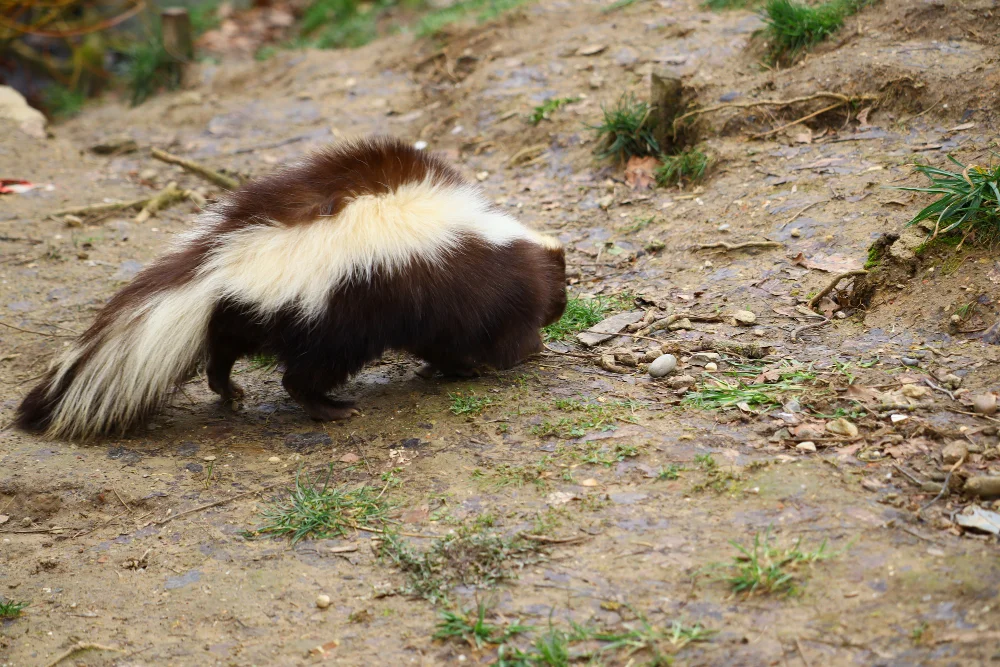
If you’ve spotted a skunk in the yard, smelled that unmistakable “warning scent,” or discovered fresh digging near your deck, you’re not alone. Skunks are common across Canada, especially in suburban areas where food and shelter are easy to find. The good news: how to scare a skunk away doesn’t have to involve risky DIY tricks or harmful products. With the right steps, you can encourage a skunk to leave—safely, humanely, and legally.
Expert Extermination works with homeowners in Montréal, offering humane, ecological animal relocation services for small mammals including skunks. But before you pick up a flashlight and head outside, here’s what you should know.
First, understand what attracts skunks
Skunks don’t typically “move in” randomly. They’re looking for:
- Easy meals: garbage, compost, bird seed, pet food, fallen fruit, grubs.
- Shelter: under decks, sheds, porches, crawlspaces, woodpiles.
- Quiet, low-traffic spaces: especially at night.
How to scare a skunk away: practical, humane tactics that work
The most effective answer to how to scare a skunk away is making your property less rewarding.
1) Remove food sources (this is the #1 trigger)
If there’s a buffet, skunks will return. Start here:
- Bring pet food indoors (and clean BBQ grease trays).
- Use wildlife-resistant garbage bins and keep lids tight.
- Reduce grubs with lawn care practices (skunks dig for them).
Food removal alone can be enough that how to scare a skunk away becomes simply “stop feeding it by accident.”
2) Use light + motion to create discomfort (not harm)
Skunks are nocturnal and prefer darkness. To nudge them out:
- Add motion-activated lights aimed at travel paths and den entrances.
- Add motion-activated sprinklers to startle without injury.
This approach aligns with humane wildlife conflict guidance used by many municipalities. It’s also a strong “first line” method for how to scare a skunk away because it reduces repeat visits.
3) Block access properly (and at the right time of year)
If a skunk is living under a structure, you need to avoid trapping it inside—especially during baby season.
Humane exclusion often uses a one-way door that allows the skunk to exit but not re-enter. However:
- In spring and summer, excluding a mother can leave babies trapped inside.
- Toronto Wildlife Centre notes one-way doors are generally safer between September and December, when babies are less likely and the ground is not frozen.
So when homeowners ask how to scare a skunk away from under a deck, the truthful answer is: it depends on timing, and the “right” fix is often professional exclusion.
4) Avoid “shortcut repellents” that can backfire (and may be illegal)
A common mistake is using products in ways they’re not labelled for—like scattering mothballs outdoors.
In Canada, Health Canada regulates pesticides, and using a pesticide in a manner other than the label directions is a violation of the Pest Control Products Act.
Translation: even if something “seems like a repellent,” it may not be legal—or safe—for wildlife deterrence.
If you’re serious about how to scare a skunk away, stick to humane environmental changes (food, shelter, light/motion), not chemical hacks.
5) Keep your distance (spray + health risks are real)
Skunks usually spray only when threatened. Approaching, cornering, or trying to chase one with a broom is exactly how people get sprayed.
Also, skunks are among the wildlife species most often associated with rabies transmission in Canada (though human cases are rare). Public health guidance emphasizes avoiding contact and seeking medical attention after potential exposure.
So how to scare a skunk away should never mean “get close.”
If the smell gets inside

Sometimes the skunk doesn’t spray directly indoors—odor can drift through open windows, HVAC intakes, or cling to pets and fabrics. If you’re searching how to get skunk smell out of house, the best strategy is to ventilate immediately, wash affected items promptly, and use an odour-neutralizing solution rather than masking sprays.
A widely referenced neutralizing mix uses hydrogen peroxide + baking soda + dish soap, which helps chemically break down odour compounds (it must be mixed fresh and used right away).
If odour persists in walls, insulation, or crawlspaces, that’s a strong sign you need a professional assessment—because trapped odours can linger and re-bloom with humidity.
When it’s time to call Expert Extermination

DIY steps can work for “passing through” skunks. But you should consider professional help when:
- A skunk is denning under a structure (deck/shed/porch).
- You see repeat digging or multiple entry points.
- There’s a high risk of spray (tight areas, pets, kids).
- You’re unsure about legal relocation rules (they vary by province; for example, Ontario has specific restrictions, including release distance rules).
In the Montréal region, Expert Extermination offers capture and safe relocation of small mammals such as skunks as a humane, ecological solution. That matters because how to scare a skunk away becomes far more reliable when the den is addressed, the access points are managed, and the conditions that attracted the animal are corrected.
FAQ
- How to scare a skunk away without getting sprayed?
Stay calm, keep distance, and use motion lighting/sprinklers. Don’t corner the skunk—give it an escape route. - Is it safe to install a one-way door anytime?
Not always. During spring/summer, babies may be present. Exclusion is generally safer in fall (often cited as September–December) depending on local conditions. - Should I use mothballs or strong chemicals as repellents?
Be cautious. In Canada, pesticide products must be used according to label directions; using them “off-label” can be a violation and may be unsafe. - What if a skunk seems sick or unusually aggressive?
Avoid contact and contact local animal services or public health guidance channels—skunks are among species associated with rabies transmission in Canada. - Why does my lawn have small cone-shaped holes?
Often it’s skunks digging for grubs. Reducing grub availability and removing food sources helps reduce visits.
If you’ve tried the basics and still need a dependable solution—or you suspect a skunk is living under your deck or shed—contact Expert Extermination for a humane, professional approach to skunk issues in Montréal, Laval, and surrounding areas.